
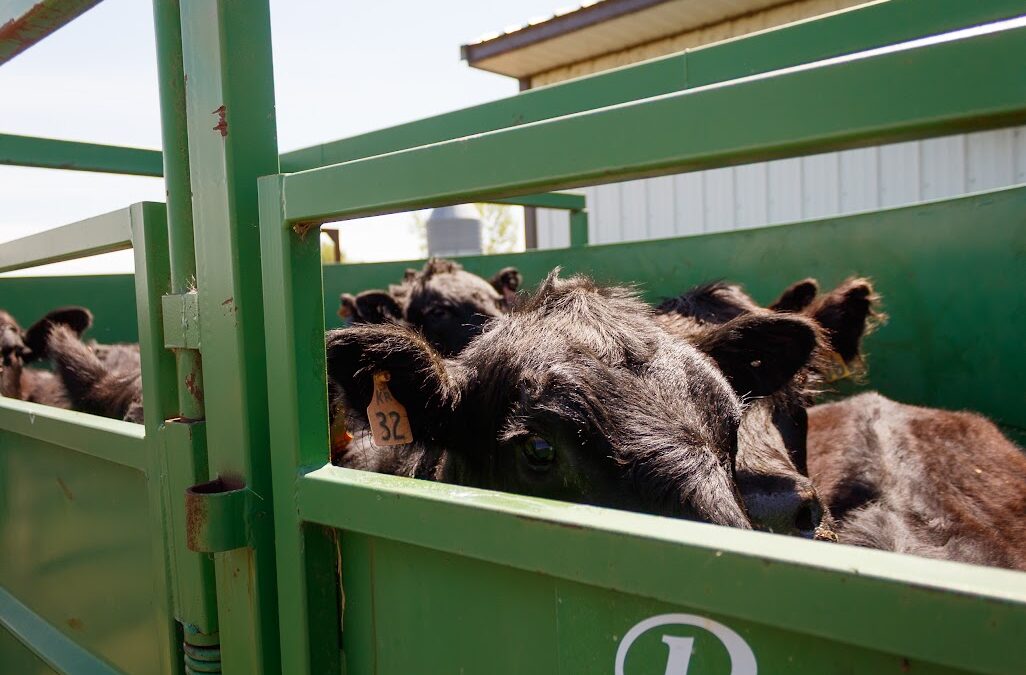
What “Raised With Care” Actually Means on Our Farm
“Raised with care” is an easy phrase to put on a website.
For us, it means much more than that.
It is the everyday decisions we make while our animals are here. It is paying attention, noticing when something looks different, making sure they have what they need and stepping in when something is wrong.
We raise animals for food, not pets, but that does not mean we do not care for them. If you are new to buying directly from our farm, we also wrote about what buying meat directly from Hillview Livestock actually looks like.
Their health and well-being matter while they are here, and we take that responsibility seriously.
A Lot of Animal Care Starts With Paying Attention
Cattle cannot tell us when something feels wrong.
A big part of caring for them is knowing what normal looks like so we can notice when something changes.
We watch how animals move, where they are standing and how they are acting within the herd.
An animal standing off by itself can catch our attention.
So can the way it is holding its head or ears, whether it is hunched up, whether it looks gaunt or whether its body condition seems to be changing.
Sometimes the first sign of a problem is a small change in behaviour, posture or condition.
That is why checking cattle is more than making sure everyone is still out there.
We are actually looking at them.
Good Care Is Also About What Happens Before an Animal Gets Sick
Animal care is not only about treating something after it goes wrong.
We want all of our animals to go into each season in good condition.
That means making sure they have enough feed, access to minerals and a diet that works for the stage they are in.
We also try to reduce unnecessary stress when we can.
A cow raising a calf has different needs than she does after that calf is weaned. Young animals that are still growing have different needs again.
Those differences matter when we decide how animals are grouped, fed and managed.
We Use Preventive Health Care Too
We also use preventive health care based on the risks our animals face.
With our cattle, that includes vaccines for certain diseases we are more likely to encounter.
That does not mean vaccinating for every possible disease.
We look at where our cattle are going, what other animals they may be around and what risks make sense for our farm. Manitoba Agriculture also provides animal health and welfare resources for livestock producers.
For example, cattle that share pasture with animals from other farms can be exposed to different things than cattle that stay within one closed herd.
Different farms will make different choices because their animals, land and management are not exactly the same as ours.
We are comfortable explaining what we do and why we do it.
“Raised With Care” Also Means Treating an Animal When It Is Sick
If one of our animals is sick and needs treatment, we treat it.
We are not going to leave an animal sick because a certain label might sound better when we sell the meat later.
At the same time, we do not give medication unless there is a reason for it.
When treatment is needed, we want to use the right product, the right dose and the right method for that animal.
Sometimes we know exactly what we are dealing with.
Other times, we need to ask for help.
Knowing When to Ask for Help Is Part of Caring for Them Too
There are situations we have dealt with enough times that we know what to look for and what steps to take.
Then there are situations we are not confident handling on our own.
That is when we call the vet.
We also have experienced farmers around us who we can ask questions when something does not look right or when we want another opinion.
Having experience does not mean guessing when you are unsure.
Sometimes the responsible thing to do is ask someone who knows more about that specific problem.
Care Also Means Making Hard Decisions
Not every decision on a livestock farm is an easy one.
Sometimes an animal does not fit the herd the way we hoped it would.
Temperament is one example.
We work around large animals, and safety has to come first. That matters even more now that our kids are growing up around the farm too.
If an animal becomes unsafe to handle, we are not willing to keep taking that risk just to keep it longer.
There are times when the safest and most responsible choice is to change the plan for that animal sooner than we originally expected.
Those decisions are not always easy, but they are still part of caring for the herd and the people working around them.
There Is No Single Picture of a Well-Cared-For Animal
Farms look different.
Management looks different.
Feed programs, facilities, pasture systems and health plans can all vary.
We do not think our way is the only way to raise livestock.
What we can do is be open about how we care for our animals here and why we make the choices we do.
And if there is something we do not know, we will say that too.
“Raised With Care” Is Really a Lot of Small Decisions
Caring for animals comes down to the decisions we make every day.
Some of those decisions are routine. Others mean noticing that something has changed and deciding what needs to happen next.
Sometimes that means adjusting feed or moving animals. Sometimes it means treatment, calling the vet or making a harder decision about an animal.
None of those things on their own are what makes us say our animals are raised with care.
It is the responsibility we take for them throughout the entire time they are here.
That is what “raised with care” means to us.
Not a marketing phrase.
Not a claim that we do everything perfectly.
Just a responsibility we take seriously for every animal in our care.