
We’ve Raised Cattle for Years, But Selling Meat Is Teaching Us a Whole New Side of Farming
Raising cattle is not new to us. Selling meat directly to customers is a much newer part of our farm.
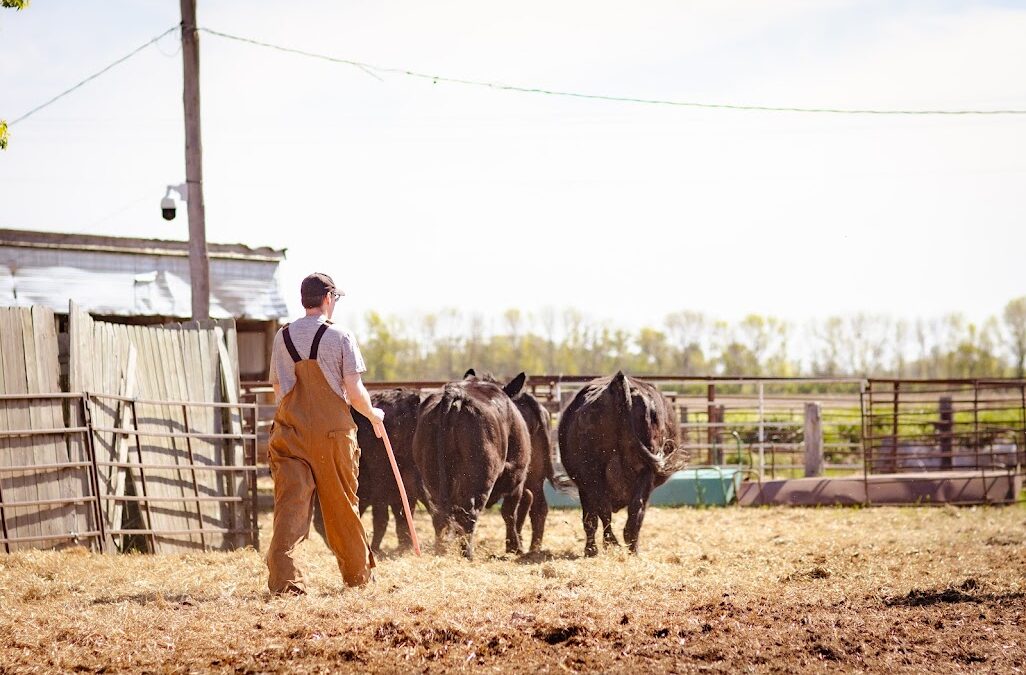
We still run a cow-calf operation, but we now keep some animals home to raise for butcher. That changes much more than where those calves end up. It affects our pens, feeding, processing, freezer space, inventory, marketing, deliveries and cash flow.
This side of Hillview Livestock has grown out of what we already knew, while teaching us a whole new part of the business along the way.
Years Around Cattle Did Not Mean We Knew This Side of Farming
We have been around cattle for years, but most of our experience came from cow-calf operations.
Kierstyn grew up helping on different family farms. The cows had their calves, raised them through the summer, and the calves were usually sold through the auction system. The cows stayed on the farm and the cycle started again the next year.
There was a lot to learn from those years. But being one of the helping hands is different from being responsible for the final decisions, the bills and what happens next.
There is also no one way to farm.
The different farms in Kierstyn’s family did things differently from each other. Some practices had been passed down for generations, while other things changed as people learned more or found a way that worked better for their farm.
That is still true today.
Years of experience around cattle give us a strong foundation. It does not mean we automatically know every part of running a farm or selling meat directly to customers.
That side of the business has brought a whole new set of things for us to learn.
Raising an Animal for Meat Changes What Happens at Weaning
In cow-calf operations, calves stay with their moms through the summer. They are weaned in the fall and then sold through the auction system.
Now, some of those calves stay on our farm to be raised for meat.
They still have to be separated from their moms.
Even when a calf is staying here, we do not leave it on the cow indefinitely. The cows need a break from raising a calf so we can manage their condition heading into winter and prepare them for calving again in the spring.
Once the calves are weaned, the ones we are keeping for butcher need to be fed and managed separately.
Keeping those calves home changes how we use the farm.
We need more pen space because we now have another group of cattle on the farm that was not there before. We also have to think about where those cattle will go as we move other groups around through winter and calving season.
Our old system was built around selling all of the calves in the fall. Once they left, those pens opened back up and could be used for other groups of cattle.
Now that some of those calves stay here to be raised for butcher, those pens are no longer automatically empty.
We have not settled on a long-term pen setup for this new system yet.
Right now, we are making do with the space we have while we figure out how to set up more pens. We also need to find a way to move cattle through the farm that works better long term.
It has changed how we think about pen space, feeding groups and cattle flow across the farm.
And keeping them is only the beginning. From there, we have to learn how to feed and grow those animals until they are actually ready for butcher.
Learning When an Animal Is Actually Ready for Butcher
Keeping cattle longer also meant we had to learn something we had never really needed to judge before: when an animal was actually ready for butcher.
Early on, we made the mistake of taking cattle straight off grass and sending them before they had enough time to finish properly.
They were healthy animals, but they were lighter than they could have been and we brought home less finished meat because of it.
That was an expensive lesson.
Now we pay much closer attention to how an animal is growing and the condition it is carrying before we book a butcher date.
We are getting better at knowing what to look for, but it is still something we are learning.
We do not have a large livestock scale here. Estimating the weight of a live animal just by looking at it is not something we are especially good at yet.
There is also more to it than weight alone. We are learning more about body condition, finishing and how the way an animal is fed and grown can affect the meat that eventually comes back to us.
It is one of those parts of farming where experience helps, but experience also has to come from actually doing it, making mistakes and learning from them.
Butcher Dates and Freezer Space Have to Line Up
Even once an animal is ready, there are still a few things that have to line up before it goes to the butcher.
We need a butcher date, and we need enough freezer space for all of the meat coming home.
That is a very different kind of planning than selling calves through the auction.
We watch the animals and, once we think one is getting close, we contact the butcher and work around the dates they have available.
At the same time, we have to look at what is already in our freezers and how much room the next animal will need.
It is easy to underestimate how much freezer space a butcher animal takes until you are the one finding a place for every box.
As we grow the meat side of Hillview Livestock, butcher dates and freezer space have become just as much a part of planning as deciding which animals are ready.
The Work Does Not End at the Butcher
When we were only selling calves through the auction system, the process was much simpler on our end.
We would load the calves into the trailer, drive them to the auction mart, unload them, and that part of the job was done.
A cheque usually came the next day, and from there our focus shifted back to the cows for the winter.
We still sell some calves through the auction mart, so that part of our farm has not changed.
The difference is that the calves we keep for meat stay on the farm. After weaning, they move into our butcher group, where we continue raising them until they are ready for processing.
That means more months of feeding, care and management before those animals ever become meat we can sell.
And even once they go to the butcher, our work with that animal still is not finished.
When the meat comes home, we weigh each package and add our own label before it is listed online. We have to keep track of what came back, how much of each cut we have and where everything is going to fit in the freezers.
Then that inventory has to match what is available on the website.
If our inventory is wrong, we can end up promising the same package of meat to two different customers or thinking we have something left when we do not.
Raising the animal is still a huge part of the job, but once that animal becomes packaged meat, a whole different kind of work begins.
Selling Meat Added a Whole New Kind of Work
Once the meat is labeled, inventoried and in the freezer, we still have to actually sell it.
That means managing the website, taking photos, adding products, advertising what we have available and staying consistent on social media.
It also means answering customer questions, packing orders, planning delivery routes and getting those orders where they need to go.
It is a very different kind of work from raising cattle.
The website has probably been one of the biggest learning curves.
At first, Kierstyn tried to do most of it herself. She could usually figure out what needed to be done. But something that might take an experienced person a short amount of time could take her hours to work through.
Eventually, we realized that being able to figure something out did not always mean it was the best use of our time.
Now we pay someone who knows what they are doing to help with the website.
That gives us more time to focus on the parts of the business that actually need us.
Selling meat directly has taught us that growing the farm is not only about learning how to do more. Sometimes it also means figuring out which jobs make sense to hand over to someone else.
The Cash Flow Works Differently Too
Keeping animals for meat changes when the farm puts out money and when that money comes back in.
With calves sold through the auction mart, the sale happens all at once and the cheque usually follows quickly.
With the animals we keep for meat, the costs continue for much longer before there is anything to sell.
By the time an animal is ready, we have more feed and operating costs into it, and then there is the butcher bill on top of that.
Once the meat comes home, the income does not arrive all at once either.
Some cuts may sell quickly, while others stay in the freezer longer. The money comes back gradually as customers place orders.
That means we have to carry those costs for longer. We also have to pay closer attention to cash flow because the whole animal is no longer sold at one time.
Selling Directly Gives the Work a Greater Sense of Purpose
When calves went through the auction mart, that was usually the last we saw of them.
Once they went through the sale ring, we did not get to see where they ended up or hear anything about the food they eventually provided.
Now, the experience feels much more connected from start to finish.
We raise the animal and care for it as it grows. Later, we bring the meat home from the butcher, package orders and deliver it directly to the families who are going to eat it.
Then we get to hear what people thought.
Customers tell us what they cooked, which cuts they enjoyed and what their families thought of the meal. Sometimes they send us pictures of what they made.
That feedback gives the whole process a much greater sense of purpose for us.
There is a lot more work involved in selling meat directly, but there is also a lot more connection to the end result.
We get to see the full picture of what all that work turned into.
It has given us an even greater love for the process. We are incredibly proud of the food we raise and the work that goes into getting it from our farm to someone’s table.
Farming Your Whole Life Does Not Mean There Is Nothing Left to Learn
There is always more to learn in farming.
That is something we already knew long before we started selling meat directly.
Throughout the year, we go to conferences and workshops on different topics so we can keep learning, ask questions and bring new ideas back to our farm.
Some of that learning is about cattle. Some is about crops, animal health, business, equipment or other parts of running the farm.
The meat side has simply added another group of things for us to learn.
We are learning more about finishing animals for butcher, processing, inventory, marketing, cash flow and how to get our products into customers’ hands.
Some lessons come from conferences or talking to people with more experience.
Others come from doing the work ourselves and seeing what works, what does not and what we want to change the next time.
We do not expect to ever reach a point where there is nothing left to learn.
Farming keeps changing, our business keeps changing and we want to keep learning along with it.
We Are Building This Side of the Farm for the Long Term
Selling meat directly has changed much more than where some of our animals go. It affects the way we use our farm, the way we plan, and the amount of time and money tied up before a product reaches a customer.
It has also given us a much closer connection to the people eating the food we raise, and that is something we are incredibly proud of.
We are not trying to build it as fast as possible.
Our goal is to grow this side of Hillview Livestock at a pace that works for our family and our farm. It also needs to work for the customers who continue choosing to buy from us.
There will be more changes as we go, because that is farming.
We keep learning, adjusting and building on what we learned along the way.